FREE GUIDE
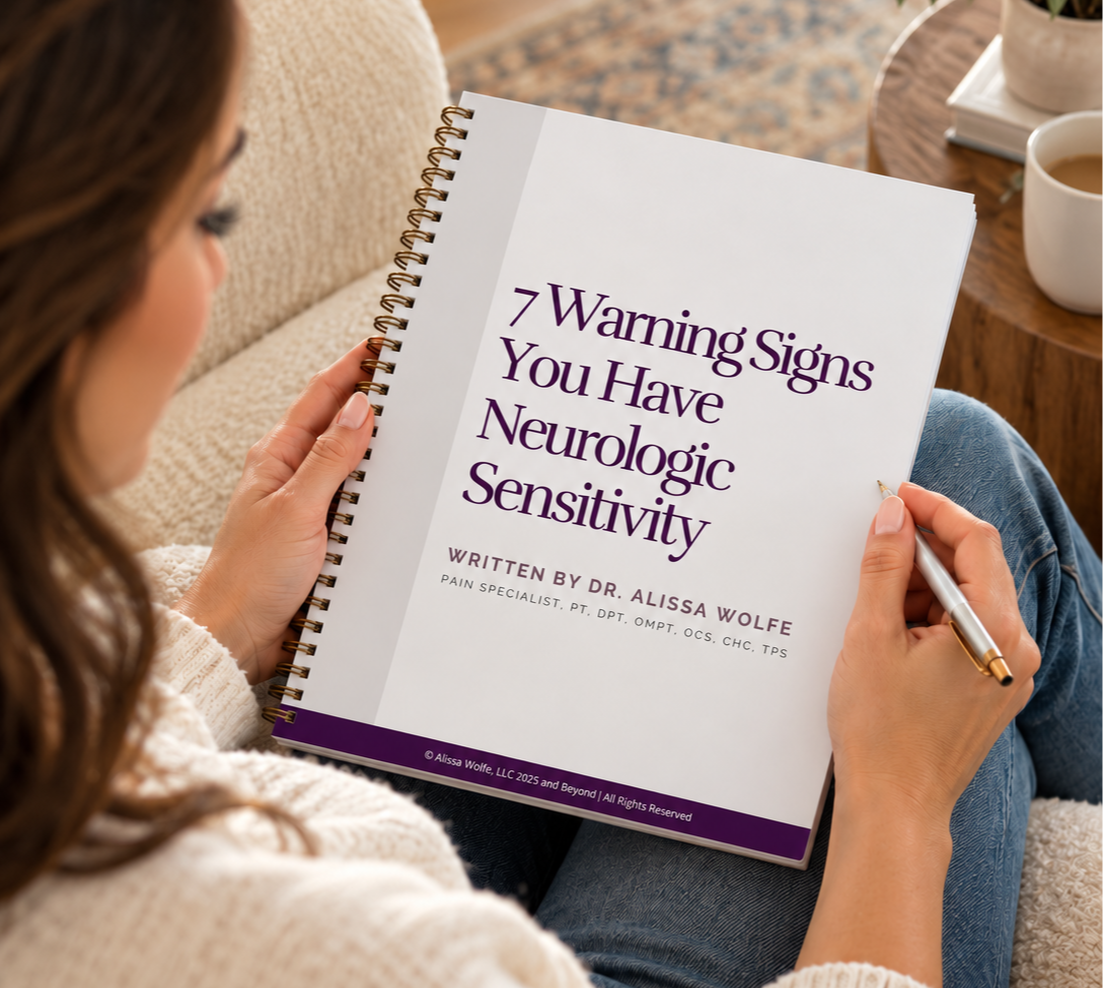
7 Warning Signs You Have Neurologic Sensitivity
The pain started as a physical problem. Now it's acting differently. These are the signs I look for when neurologic sensitivity has joined the picture, and why the usual treatments stop working once it has.
Something is being missed.
Your scans don't explain it. The treatment that helped at first stopped helping. Flares take longer to settle, and the pain doesn't follow the rules anymore.
That's not in your head, and it's not a low pain tolerance. It's a physical change in the sensory signaling system itself: the nerves and pathways that detect, transmit, and respond to pain. I call it neurologic sensitivity.
Inside the guide:
✔️ The 7 warning signs that neurologic sensitivity is driving your pain
✔️ Why strengthening, stretching, injections, and "more of the same" stop working once it's in the picture (and why that's not your fault)
✔️ What needs to change in your plan when the pattern changes
Hi, I'm Dr. Alissa Wolfe.
Pain Specialist, PT, DPT, OMPT, OCS, CHC, TPS
Founder of The Uprising: Complex Pain Academy
I spent years in the orthopedic model. I didn't reject it. I expanded it. Complex pain is almost never either/or. It's physical AND neurologic, and the scans alone can't tell you how much of each.
I wrote this guide for the people who've done everything right and are still stuck: told it's just their joints, or worse, that it's all in their head. Neither is the full story.
If several of these signs sound familiar, that's not a reason for alarm. It's information. Neurologic sensitivity can change, but only with a plan aimed at the right target.

