TENS for CRPS: Why Electrical Stimulation Can Make CRPS Pain Worse
TENS units, microcurrent, NMES, spinal cord stimulators. If you have CRPS, someone has probably suggested at least one of them. Electrical stimulation is one of the most common pain management tools in physical therapy clinics, chiropractic offices, and online stores. For a sprained ankle or a stiff low back, it is a reasonable short-term option.
CRPS is different. I am a board-certified orthopedic physical therapist who now works exclusively with complex pain, and electrical stimulation in almost any form is not my go-to for managing CRPS pain. Here is the reasoning, so you can make an informed decision about your own care.
What Is Already Happening in the Nerves of a CRPS Limb
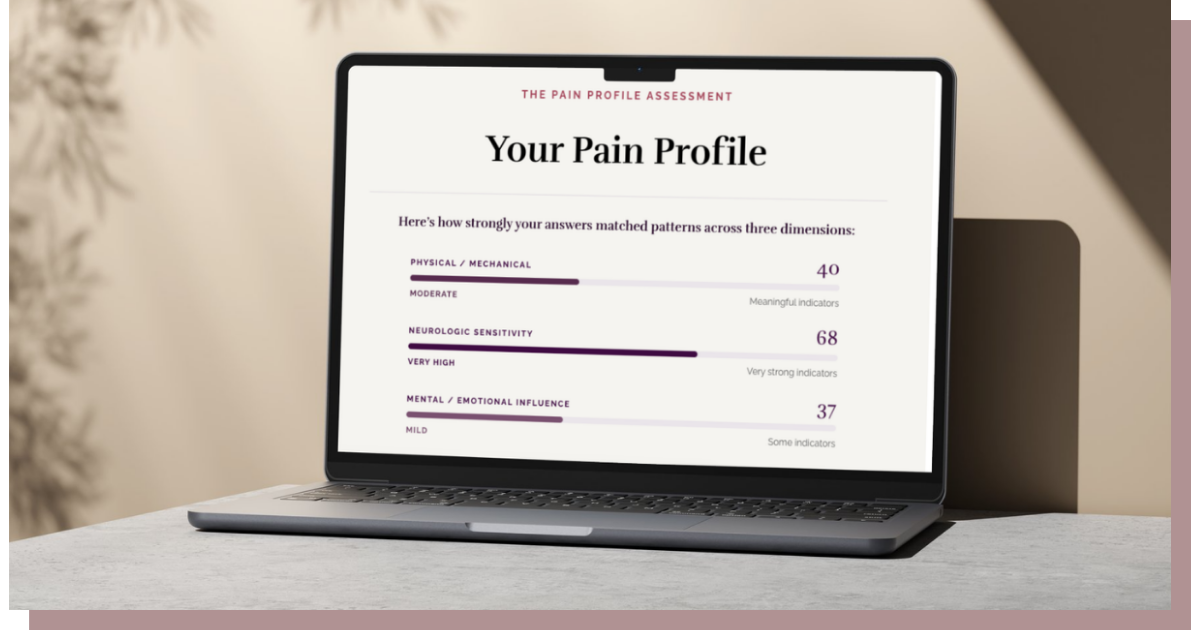
In CRPS, the nerves in the painful region become overly sensitive and reactive. They pick up every small stimulus (a bedsheet, a breeze, a change in temperature) and fire far more than the input deserves. This is one half of what I call neurologic sensitivity: the local nerves have ramped up their defenses, and the signaling system now treats ordinary input as a threat.
So the logic is simple. Those nerves are already firing too much. The goal is to give them reasons to settle, and to avoid anything that makes them fire more.
Why Electrical Stimulation Is Counterintuitive for CRPS
Electrical stimulation works by sending current through the skin to activate nerve fibers. That is the entire mechanism. On a healthy area, the extra input can temporarily change how pain is perceived. On a CRPS limb, it means delivering more stimulation to nerves that are already overactive.
Short-term relief and long-term effect are two separate questions. A TENS session can feel fine in the moment and still add to the load on a signaling system that is already overwhelmed. For CRPS, I care about both questions, and the second one matters more.
A New Name Does Not Make It a New Treatment
Every year, a new device arrives promising to "reset" your nervous system, change your brain waves, or fix pain with a proprietary current. Look closely and nearly all of them are electrical stimulation with a new name.
Here is how that happens. Most people have heard of TENS, and most people who have tried it know it gives modest relief. To sell a newer, more expensive version, a company changes a few parameters and gives it a fresh label. I could invent one right now: "low-frequency neuro-reprogramming current," packaged in a handheld unit that syncs to an app on your phone. It would sound advanced. It would still be electrical stimulation.
The common forms you will see include:
- TENS (transcutaneous electrical nerve stimulation)
- Microcurrent
- NMES (neuromuscular electrical stimulation), sometimes called Russian stimulation
- Spinal cord stimulators
- Branded consumer devices that claim to reset or reprogram the nervous system
What actually changes between these devices is the frequency, the amplitude, and the pulse width. Those adjustments change how the current feels. They do not change what it is. Before you invest money and hope in the next device, ask one question: is this different, or is it electrical stimulation with new packaging?
Spinal cord stimulators deserve a separate conversation with your physician because they are implanted and carry their own considerations. They still belong in the same category: electrical input added to a sensitive system.
What About Using It Somewhere Else?
A common follow-up: if not on the painful area, what about the other arm, the other leg, or a spot higher up on the same side?
Using electrical stimulation on a remote area may be acceptable for some people. I would still be cautious about placing it on the opposite limb or anywhere on the same-side limb, because CRPS can spread. The same sensitivity that developed in one limb can show up in another, and I do not want to give a sensitive system extra reasons to expand its territory. If spreading is a concern for you, read CRPS Explained: What Happens in Your Nerves, Why It Spreads, and Which Treatments Help.
My general position for CRPS:
- Avoid electrical stimulation directly on the affected area.
- Think twice before using it on the opposite limb or the same-side limb.
- Treat remote use as a case-by-case decision, not a default.
Where Pain Management Fits
I am not against pain management. CRPS is one of the most painful conditions there is, and less time spent in pain is a good thing. Managing pain is necessary and compassionate.
The point is that pain management strategies are not all created equal. Some give relief today while reinforcing the mechanisms that keep the pain going. With CRPS, that trade-off deserves a hard look, and electrical stimulation on or near the affected limb sits squarely in that category.
The strongest plans pair short-term relief with work that has a long-term effect on the signaling system itself. That is a different job from adding stimulation.
What Changes the Signaling System Instead
If the nerves in a CRPS limb are overactive, the long-term work is to give them input they can tolerate and learn from, at a dose they can handle. In my practice that means a deliberate sequence:
- Pain Neuroscience Education, so you understand what your system is doing and why the order matters.
- Graded motor imagery, starting with left/right discrimination, then explicit motor imagery, with mirror therapy last.
- Sensory discrimination, which sharpens how the brain reads the limb without provoking pain.
- Neurodynamic techniques, modified so the nerves get movement without being provoked.
- Pacing adapted for hypersensitivity, so you push to your tolerance, not through it.
Before You Buy the Next Device
If electrical stimulation is part of your current plan, bring these questions to your provider:
- Is this being placed on, or near, my affected limb?
- Is it helping me do recovery work, or replacing it?
- What is the long-term effect on my signaling system, separate from how I feel during the session?
- Is this device actually different from TENS?
Clear answers to those questions can save you money, time, and flares.
Want the full picture? Watch my free three-part CRPS series: what is actually happening in the nerves and brain, which treatments help and which cost you later, and what you can do about it.
Ready for a structured plan? The Uprising: Complex Pain Academy is built to address neurologic sensitivity in CRPS step by step, in the right order.