Why Surgery and Injections Don't Fix Chronic Pain: The Garden Hose Problem
You had the surgery, the injections, the physical therapy. The disc bulge was addressed, the nerve was decompressed, the joint was repaired. And the pain is still there. Or it improved for a few weeks and came back. Or it moved somewhere new.
The question I hear constantly is: "How can my pain get better if I don't fix what's physically wrong?" It's a valid question. The answer starts with nerve sensitivity, which plays a large role in persistent pain and which no structural fix is designed to address.
The Garden Hose Problem
Picture a garden hose with a kink in it. The kink slows the water down. That kink is like a real structural problem: a compressed nerve, a disc bulge, a narrowed space in the spine. It's an actual injury, and in some cases surgery or another procedure helps by straightening it out.
Now picture that at the same time, the pressure at the tap is running far higher than it should. Water is being pushed through the system with much more force than the hose was built for.
That high pressure is nerve sensitivity. Your nerves and the pathways that process their signals have become overly sensitive, sending far more pain signals than the situation calls for.
Here's the problem: fixing the kink does nothing to the pressure at the tap. You can straighten the hose perfectly, and the system is still running under too much pressure. That's why so many people still struggle after surgery, injections, physical therapy, and other structural fixes. The procedure may have done exactly what it was designed to do. It just wasn't designed to address the pressure, which is a big part of why chronic pain persists after treatment.
For complex and persistent pain
Something is being missed.
The Uprising: Complex Pain Academy is a structured, 5-phase program that targets the neurologic sensitivity behind persistent pain, in the right order and at the right dose, with a specialist guiding every step.
Why Structural Fixes Often Fall Short for Complex Pain
Surgery, injections, adjustments, and many physical therapy programs share one assumption: find the damaged structure, fix it, and the pain resolves. For an acute injury, that assumption often holds.
Complex and persistent pain is different. When pain has been present for months or years, the signaling system adapts. Pathways that carry and process pain signals become overactive, firing more readily and more intensely than the original injury warrants. Over time, the pressure in the system can become a bigger driver of what you feel than the kink itself.
This shows up in recognizable ways:
- Pain that persists after a procedure the surgeon describes as successful.
- Injections that bring relief for a short window and then wear off.
- Pain that spreads beyond the area that was treated.
- Sensitivity to touch, pressure, or movement that seems out of proportion to the original problem.
- Imaging that looks better, or normal, while pain stays the same.
None of these mean the procedure was wrong or that you did something wrong in recovery. They point to a driver that the structural approach doesn't reach.
You Can Lower the Pressure Without Fixing the Kink
What most people don't realize is that the pressure in the system can come down even if the kink is never fixed.
That changes the options considerably. Maybe you're unsure about surgery. Maybe surgery isn't an option for you. Maybe you've already had one or two procedures and don't want another. Or maybe you simply want to explore every reasonable path before taking an irreversible step.
In each of those situations, addressing neurologic sensitivity directly is a path that doesn't depend on changing the structure. It works on the part of the problem that the procedures leave behind.
This is the work I do with women who have complex pain: lowering the sensitivity of an overactive pain system so they can move, sleep, and live again, without relying on more pills, more procedures, temporary fixes, or endless trial and error.
What Addressing Nerve Sensitivity Involves
Lowering the pressure in the system requires methods that target the signaling system itself, not the tissue. These include pain neuroscience education, the Graded Motor Imagery sequence, sensory discrimination, and neurodynamic techniques for overactive peripheral nerves, along with pacing that respects a sensitive system and movement and strengthening layered in once sensitivity has started to settle.
The guiding principle is push to it, not through it. Forcing through pain adds pressure to a system that already has too much.
The methods matter, but so does the structure around them. Which methods come first, how much is done, and how each is adjusted to the individual decide whether they lower sensitivity or provoke a flare. That's the difference between a collection of techniques and a process that produces lasting change.
Questions Worth Asking Before Your Next Procedure
If you're weighing surgery, another injection, or another round of a treatment that hasn't worked before, these questions are worth bringing to your provider:
- What specifically do you expect this procedure to change, and how will we know if it worked?
- If the structure is corrected and my pain continues, what's the plan then?
- Could nerve sensitivity be contributing to my pain, and how would that be assessed or treated?
- How did my pain respond to the last structural treatment, and what does that tell us?
Good providers welcome these questions. If the answer to "what if the pain continues?" is "there's nothing more we can do," know that this is not an evidence-based statement. It means the structural options have been exhausted, not that your options have.
Fix the Kink, Then Address the Pressure
Structural treatment has a place. Sometimes the kink needs fixing. But when the pressure in the system is the driver, straightening the hose alone will not bring lasting relief. The people who move forward are the ones who stop searching for the next structural fix and start addressing the sensitivity of the system itself.
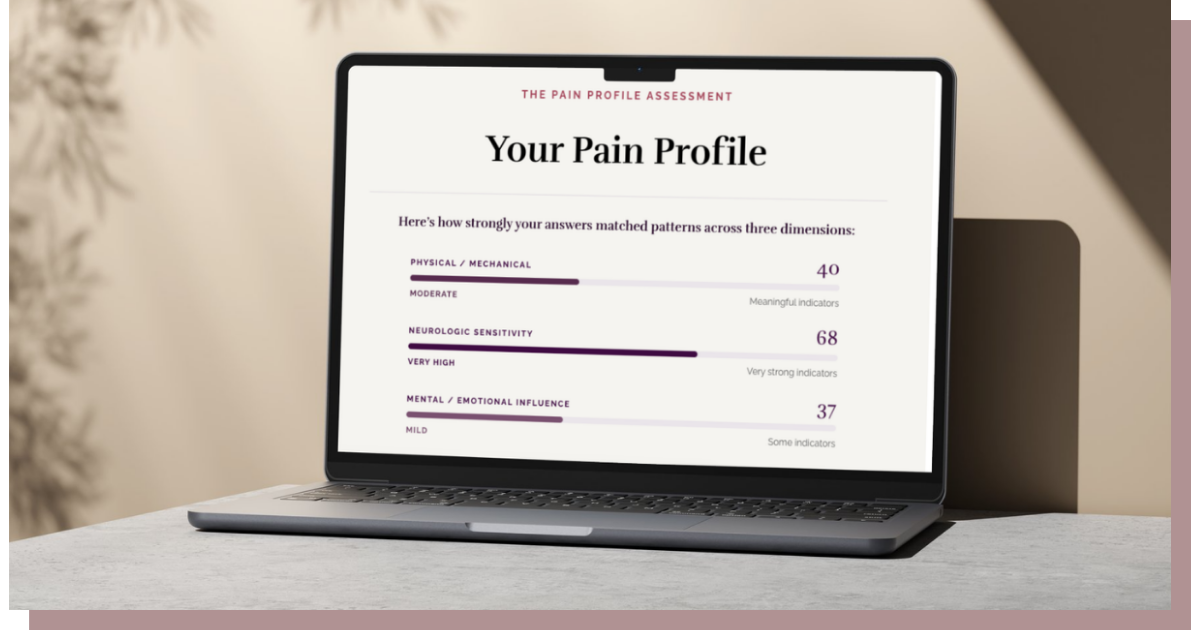
Not sure which dimension is driving your pain? Take the free Pain Profile quiz and get three separate scores: physical, neurologic sensitivity, and mental/emotional.
If neurologic sensitivity turns out to be the driver, that's exactly what The Uprising: Complex Pain Academy is built to address.