
LED BY PAIN SPECIALIST, DR. ALISSA WOLFE, PT, DPT, OMPT, OCS, CHC, TPS
Relieve complex pain by targeting the neurologic signaling system driving it — not just the body or the mind
JOIN THE COMPLEX PAIN REVOLUTION
Different Complex Pain...
Same Worn-Out Script:

→ "Try this pill/injection/surgery/physical therapy..." — wash, rinse, and repeat
→ "Just meditate," or worse, "It's all in your head."
→ And eventually... "There's nothing more we can do."
Meanwhile, the burning, buzzing, and crawling sensations are still keeping you up at night. You're still bracing for even the lightest touch.
Still weighing whether every outing is "worth it". Still being offered medications that may mask the symptoms, but leave you feeling like a zombie.
And deep down, you feel like something is being missed.
BECAUSE IT IS.
Conventional care is decades behind the research.
Most approaches are built around either managing pain OR managing stress —
And they completely miss the neurologic component driving both.
THE PAIN SYSTEM CAN ADAPT, becoming hypersensitive and amplifying signals regardless of diagnosis or injury status.
This neurologic sensitivity exists on a spectrum. It’s not a “you-either-have-it-or-you-don’t” situation.
That’s why traditional physical therapy often stalls or backfires (and why the “no pain, no gain” approach makes things worse).
And why mind-body approaches fall short — oversimplifying this as just a “fight-or-flight” issue, missing what’s actually driving those responses.

INTRODUCING THE
The only program that leads you through a 5-phase protocol targeting neurologic sensitivity directly.
(without relying on cognitive, emotional, or stress-regulating techniques as the main solution)
No more playing 'whack-a-mole' at your doctor's office, or the rollercoaster of getting your hopes up for the next visit, only to leave you defeated, deflated, and demoralized.
No more “no pain, no gain” PT visits that take three days to recover from.
No more approaches that reduce complex pain to a stress response and leave the neurologic component driving it completely unaddressed.
No more being dragged down in “support” groups that are really just commiseration circles — trading horror stories with no way out.
No more cobbling together a plan without any real guidance or structure — wondering what you’re missing and what you’re doing wrong.
No more putting your faith in wellness coaches with no advanced clinical training, promising that what worked for them will work for you.

The Complex Pain Revolution is here.
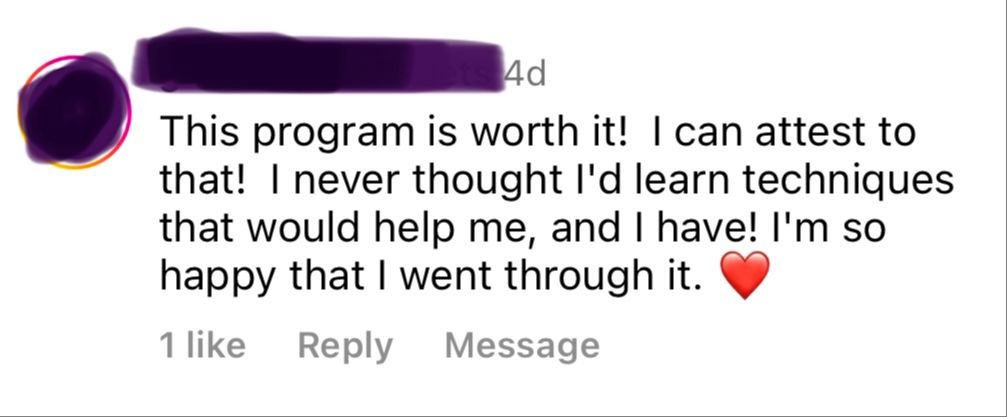
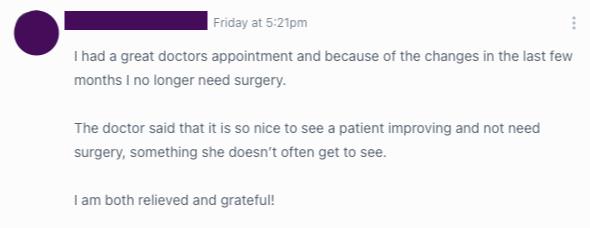


- How to optimize sleep and use targeted breathing drills to shift your body into a recovery state
- How to prevent and manage pain spikes so you have longer stretches of "good days" - and "bad days" are few and far between



It's a complete, structured approach where each phase builds on the last (not a collection of tools) — designed specifically for complex and persistent pain.
Compare the Chronic Pain Breakup Method to other common approaches:
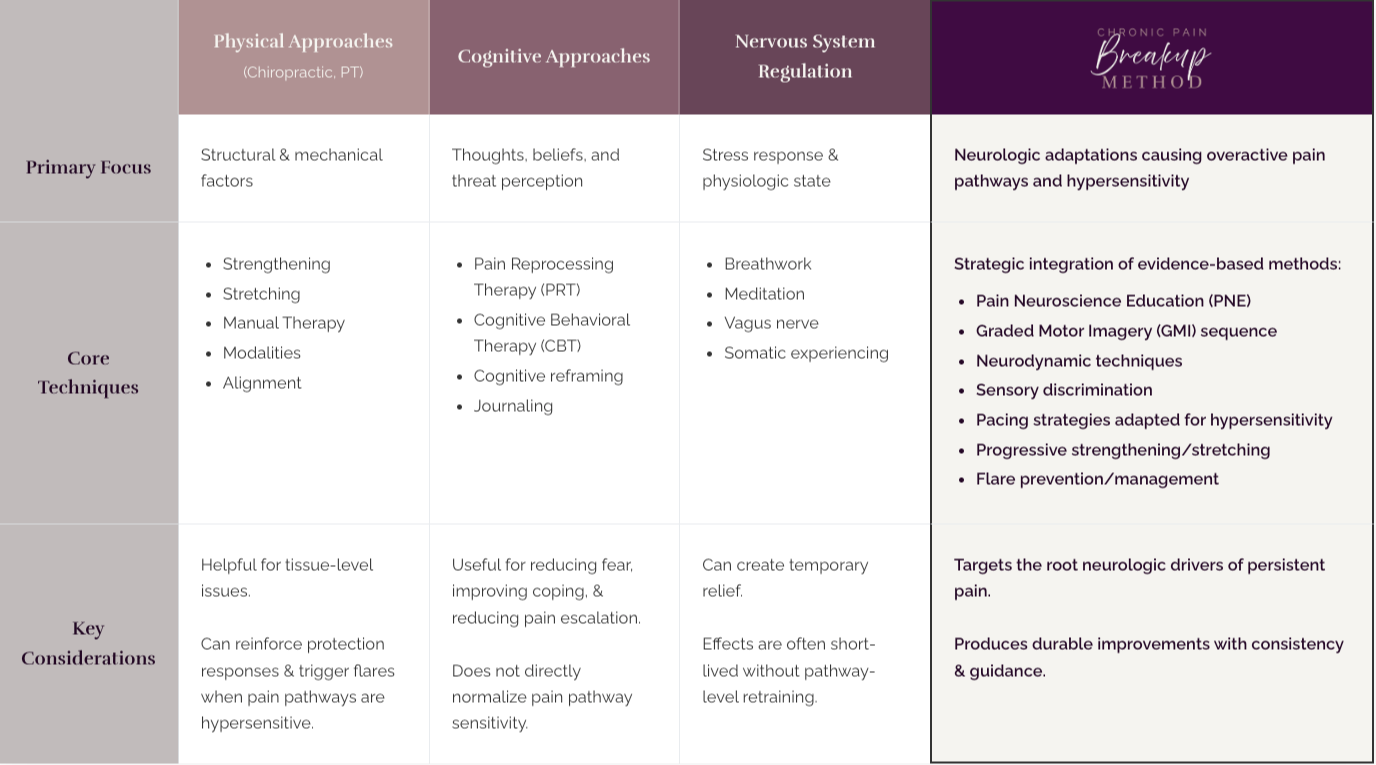
* Note: The approaches shown here can be used together as complementary strategies.
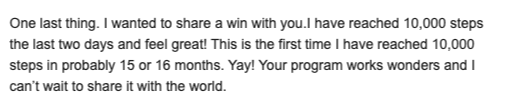
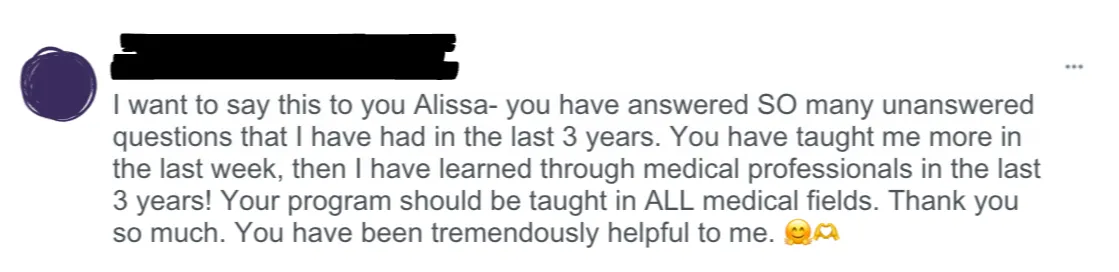
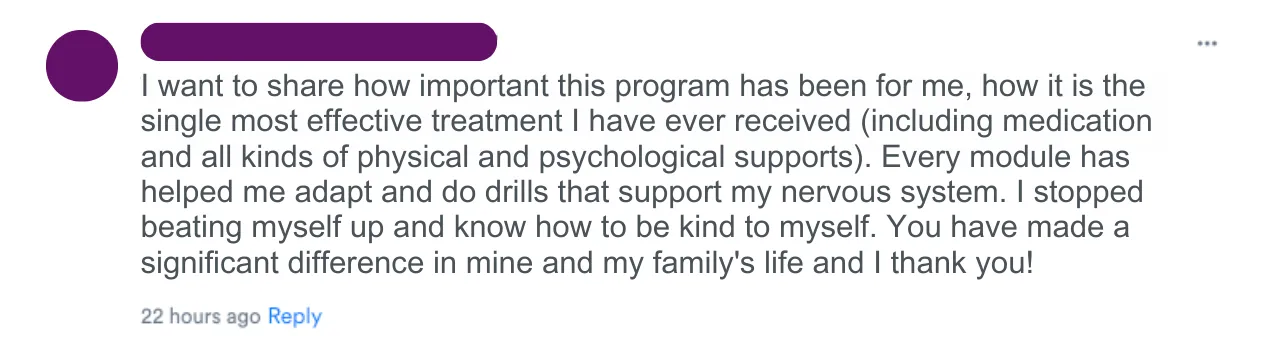
You don't want another program with well-meaning platitudes. You want results.
Among participants who complete this program:
Additional Outcomes
- 96.2% experience reduced anxiety and/or depression
- 86% report less fatigue and clearer thinking
- 70.5% improve sleep quality (averaging +1.5 hours per night)
- 100% gain practical knowledge and tools to support ongoing recovery
This is perfect for you if:
- You've had complex or persistent pain for months or years, and you feel like something is being missed.
- You want to reduce pain and restore function — not just learn to cope with it. You refuse to accept "learn to live with it" as the final word.
- You're ready to take action and understand that real progress takes time and consistency — and you're willing to show up for it.
- You're the person who does the research, is intelligent and resourceful, but you need a little help to put everything together without all the overwhelm and guesswork.
This is NOT for you if:
- You're expecting a quick fix or only want passive solutions — you want someone or something to fix you.
- You've decided you can't get any better and you're looking for validation rather than a path forward.
- You already "know it all" and have "tried it all" — so you're not open to the possibility that there's more to the picture.
See how this approach works
What You'll Walk Away With:
Be your own expert with everything you need to maintain your progress and continue improving — without relying on anyone else to tell you what to do.

Clarity & Confidence
Understand the neurologic factors driving your symptoms
This level of understanding gives clarity on what to target, confidence in your approach, and direction for making meaningful change. No more throwing spaghetti at the wall.

Proven Strategies
(Daily Implementation)
Master the specific techniques that normalize neurologic signaling
Master techniques like pacing ("push to it, not through it"), nerve drills, laterality training, motor imagery, sensory discrimination, and mirror therapy. Learn the proper strategy, order, and how to put it all together in ~20 minutes per day.

Flare Prevention & Management Plan
Reduce pain flare frequency, duration, and intensity
Predict and prevent flares by spotting patterns — without overtracking. Recover quickly when they happen.

Strategic Return-to-Activity Plan
Master pacing and safely rebuild physical capacity
Find the "sweet spot" between overdoing and underdoing to expand physical tolerance. Learn to layer in stretching and strengthening safely.

Adaptable Framework
(Not a Rigid Routine)
A complete system you can adjust for your life and symptoms
You become the expert. No more waiting to be told what to do next. You'll understand how to adapt the framework yourself and maintain progress through life changes, travel, stress, and symptom variations.
The Result? Pain takes the back seat and you live life on your terms.
The Chronic Pain Breakup Method
Inside the Program
The full structure of how we work together.
Training Modules
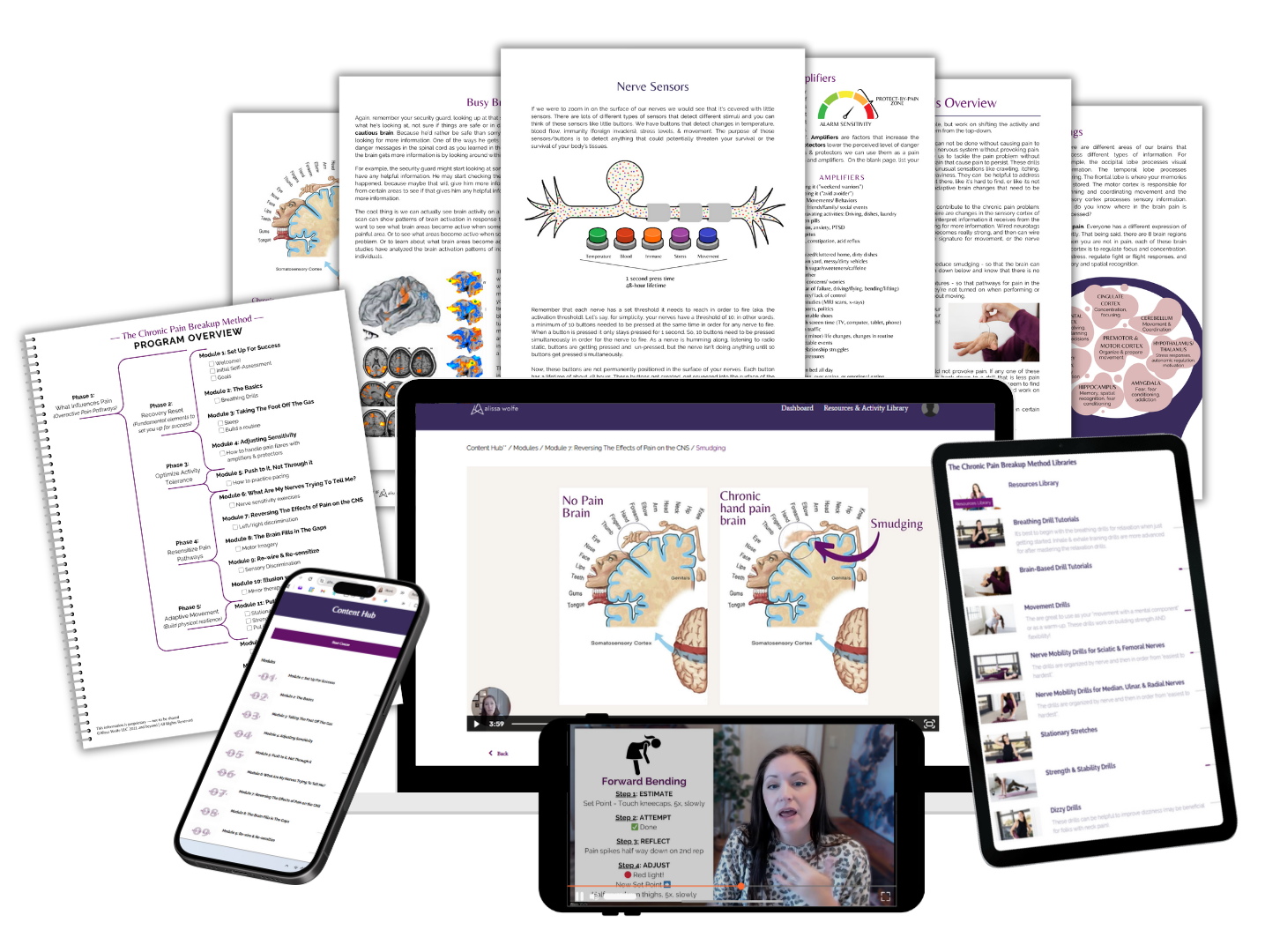
14 on-demand modules with video lessons. Work through each module at your own pace, typically one per week, introducing one new technique at a time.
Includes:
- Over 11 hours of content + handouts + transcripts
- Lifetime access to extensive resource & tutorial libraries
- Regular accountability emails
- Self-assessments to monitor your progress
Coaching Inside My Inner Circle
Women Only- Weekly Live Coaching Sessions — access for 16 weeks
- Direct Messaging Support with Alissa (M–F) — access for 16 weeks
- Private Community of Women — access for 16 weeks
- Final 1:1 Wrap-Up Session — review progress and ensure continued success after you leave the Inner Circle
- Detailed Results Summary — clear overview of improvements across 17 key areas
Self-Guided Path Also Available
Independent Study
Get access to all the training modules with the option to add individual 1-on-1 coaching sessions with Alissa as needed. Open to all.
Hi. I'm Dr. Alissa Wolfe
When I graduated with my doctorate in physical therapy in 2014, I expected that if I followed best practices, my patients would improve... But many didn’t.
Unwilling to settle for 'this is just how it is, get used to it'... I went looking for more. I did advanced specialty training in manual therapy and became board-certified in orthopedics. And still, I knew something was being missed.
I read research articles on PubMed while everyone else was bingeing Netflix. In 2019, I became one of the first to complete a specialty certification in therapeutic pain science.
What I learned confirmed that most pain care was built on outdated assumptions that treated all pain the same, completely overlooking how the pain system adapts over time. Most clinicians aren't trained to identify or address neurologic adaptations associated with complex and persistent pain.
In an attempt to fill this gap, I started several pain programs in clinics and hospitals across the country. But I kept running into insurance red tape and professional restrictions - a system that wasn't designed to address the neurologic component driving complex pain.
So in 2021, I turned down a secure position as a clinic director, stepped out of my comfort zone and the confines of an outdated medical system, and I created my own program. And years later, I haven't looked back.
I may not have my own experience with pain, but I have a calling to help those who do. My Christian faith is at the center of how I show up for every client. I believe each person I work with deserves to be fully understood and given a real path forward.

PAIN SPECIALIST,
PT, DPT, OMPT, OCS, CHC, TPS
- Certified Therapeutic Pain Specialist, International Spine & Pain Institute, 2019 (TPS)
- Doctor of Physical Therapy, Mount St. Mary's University, Los Angeles, CA, 2014 (DPT)
- Board Certified, Orthopedic Clinical Specialist, American Board of Physical Therapy Specialties, 2017 (OCS)
- Certified Orthopedic Manual Physical Therapist, Evidence in Motion Institute of Health Professions, 2016 (OMPT)
- Bachelor of Science, Biology & Physiology, California State University Long Beach, 2011 (BS)
- Certified Health Coach, ACE Health Coach, 2022 (CHC)
- Founder, The Chronic Pain Breakup Method, 2021
Many people believe that recovery requires hands-on care and a provider prescribing every step. What I've found is the opposite.
This program teaches you to be independent. Not reliant on my hands, my prescriptions, or my presence. It gives you the decision-making framework, the understanding, and the tools to build your own plan and maintain it as you progress.
The recovery journey leads many into a state of information overload, throwing spaghetti at the wall, not knowing what's working or what to do next, hoping something eventually sticks.
This program gives you the structure to put evidence-based methods together into a cohesive system. Each technique is introduced one at a time and layered intentionally, so you always know what's working and what needs adjusting.
All-or-nothing thinking is one of the biggest obstacles to recovery. Striving for perfection is a game you'll always lose. Consistent effort beats perfect effort every time.
In this program, progress is the goal, even when progress isn't linear. Setbacks aren't failures — they're learning opportunities.
The "no pain, no gain" model is not only outdated — in complex pain, it's actively counterproductive. You shouldn't have to claw your way back to baseline after a single PT session.
None of the methods in this program are intended to increase your pain. In this program, you'll learn to find and stay in your recovery zone while using techniques that will lower your baseline level of sensitivity overall.
Frequently Asked Questions
THE METHOD & APPROACH
• How is this different from mind-body approaches (like pain reprocessing, somatic work, or nervous system regulation)?
• How is this different from physical therapy and other exercise/movement-based programs?
• I’ve tried other programs that flared my symptoms. Will this do the same?
THE TECHNIQUES
• What methods do you teach, and what does a typical day look like?
• Are there any studies legitimizing the techniques?
RESULTS & WHAT TO EXPECT
• What's the program success rate?
• Is this where I'm learning to cope with symptoms, or actually treat them?
IS THIS THE RIGHT FIT
• Have you seen people with symptoms like mine? Will this program work for my specific condition?
• Will this work if I have ongoing physical issues (like disc bulges, arthritis, etc.)?
PROGRAM STRUCTURE & HOW IT WORKS
• How does the program work?
• How much time does it take?
• Why is the Inner Circle women only?
ABOUT ALISSA
• What kind of doctor are you? What is your training and experience?
• How did you get into this work?
Have more questions? Let's discuss them on a free Pain Care Call.
IF YOU'RE STILL HERE AND YOU HAVEN'T BOOKED A CALL YET, HERE'S YOUR SIGN
The Chronic Pain Breakup Method is for you.
(You wouldn't still be reading if it wasn't.)
Nothing changes until you do. Another year of the same outdated protocols won't get you a different result. Another specialist following the same playbook won't either. Complex pain doesn't resolve on its own... and it doesn't resolve with singular fixes.
The Chronic Pain Breakup Method leads you through a structured, neurologic approach designed to address what every other program overlooks, built on the evidence the rest of the medical system hasn't caught up to yet.
